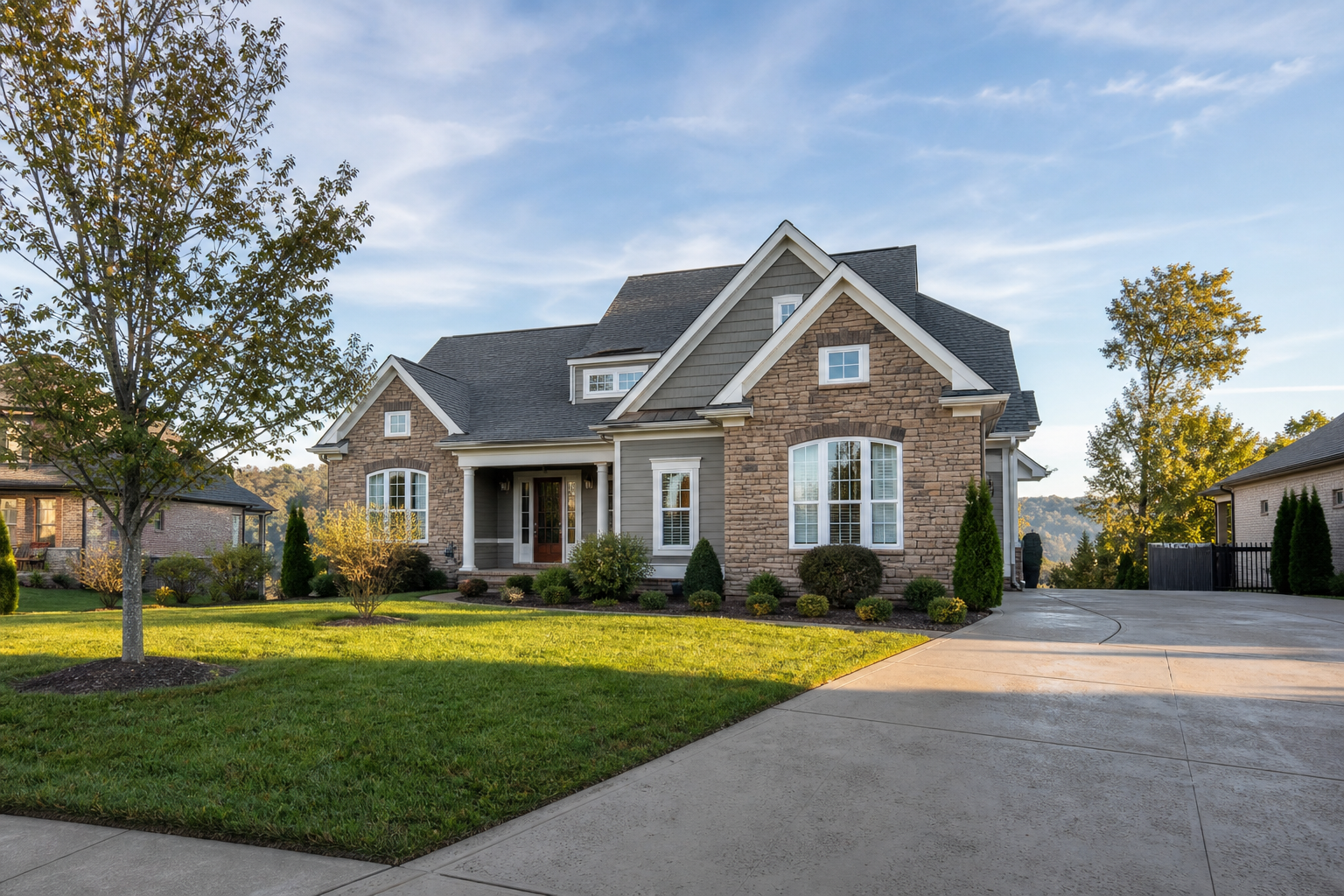
Pricing your Madison County home correctly from day one means using a CMA built on the last 60-90 days of local sales, not last year's numbers. In 2026, roughly 60% of Madison County sales are closing below list price, so overpricing at launch leads to longer days on market and a lower final sale price.
How should you price your home in Madison County to avoid sitting on the market?
Price it at what the last 60-90 days of comparable Madison County sales actually support, not at what you hope the market will bear. In 2026, the county is a transitional market: homes still sell, but buyers are price-sensitive, roughly 60% of sales are closing below list price, and overpriced listings are sitting for months while correctly priced ones go under contract in weeks.
Key Takeaways
- According to Zillow's Summer 2026 data, about 60% of Madison County home sales closed under list price, compared to fewer than 20% closing over list.
- The median sale-to-list ratio in Madison County was approximately 0.984 in Summer 2026, meaning most sellers netted slightly below their asking price even on successful sales.
- Between August 2025 and July 2026, RealtyTrac data shows Madison County median sold prices declined roughly 7.5% while inventory more than doubled, a clear signal that buyers are resisting aggressive list prices.
- Average days on market ranged from about 69 days in January 2026 to about 42 days in June 2026, per local MLS data, with correctly priced homes driving the faster end of that range.
- A real-time CMA built on closed comps from the last 60-90 days, active competing listings, and local list-to-sale ratios by price band is the only reliable tool for setting a defensible list price in this market.
What is actually happening in the Madison County market right now?
The Madison County market in 2026 is not the frenzied seller's market of 2021-22, and it is not a buyer's market either. It sits somewhere in between, and that middle ground is exactly where pricing mistakes are most costly.
Here is what the data show. Realtor.com's August 2026 market report for Madison County puts the median list price in the low-to-mid $340K range and median days on market in the low 50s, classifying it as a "warm" seller's market. That same report notes closed sales averaged roughly 1-2% below asking price, with a sale-to-list ratio near 99%.
Dig a little deeper and the picture gets more nuanced. Zillow's Summer 2026 data shows a median list price near $330K, a median sale price around $304K, and a sale-to-list ratio of approximately 0.984. About 60% of sales closed under list price. Fewer than 20% closed over list. That is not a market where testing a high number and waiting for bidding wars makes sense.
The trend line is equally telling. RealtyTrac's tracking of Madison County between August 2025 and July 2026 shows median listing prices rising modestly from about $275K to $280K, while median sold prices fell from about $263K to $243K, roughly a 7.5% decline. Meanwhile, homes for sale more than doubled over that same period. Higher list prices, lower sold prices, and sharply more inventory. That combination tells you everything about what happens when sellers price ahead of where buyers actually are.
On a seasonal basis, local MLS-based reporting shows the county's average days on market was about 69 days in January 2026, dropping to roughly 42 days by June 2026, as more buyers entered the market. The spring and early summer window moved correctly priced homes. The ones sitting at 60-plus days were, almost without exception, the ones that started too high.
What does this mean for sellers entering the market now?
It means the market will tell you the truth whether you want to hear it or not. If you price above where buyers see value, they will simply move on to one of the other roughly 640 active listings across the county. With regional Bluegrass-area inventory rising from about 3,900 homes in January 2026 to over 4,200 by June 2026, buyers have options. They are not desperate.
Your specific number depends on your home's condition, location, price band, and what has actually closed nearby in the last 60-90 days. That is not a calculation you should be pulling from a portal estimate. It is what a real-time CMA is built for.
What should a real-time CMA for Madison County actually include?
A CMA is not a Zestimate. It is not last year's sale price on your neighbor's house. And it is not a number your agent picks to win your listing. A credible CMA is a structured analysis of what buyers in your specific corner of Madison County are actually paying right now, for homes like yours.
According to the National Association of Realtors, a CMA draws on three categories of data: recent comparable sales, current competing listings, and under-contract properties. All three matter. Closed sales tell you what buyers paid. Active listings tell you what you are competing against. Under-contract properties tell you what price points are drawing offers today.
For Madison County in late 2026, we build every CMA around these inputs:
- Closed comps from the last 60-90 days in the same sub-area of the county, matched by age of construction, square footage, and condition. Not last year. Not county-wide averages.
- Active and pending listings within that micro-market, so you can see what price points are sitting versus going under contract.
- List-to-sale ratios by price band. The dynamics under $300K are different from the $300K-$400K range. We pull those separately from local MLS data, not from national portals.
- Days on market patterns for similar homes, broken down by whether they were priced correctly from launch or needed reductions.
- New construction competition. With new builds active in fringe areas around Richmond and Berea, a CMA for an existing home has to account for what buyers can get brand-new at a comparable price point.
One more factor worth noting: within Madison County, a home near Richmond city amenities, Eastern Kentucky University, or a commuting route to Lexington will justify a different price per square foot than a comparable home in a more rural part of the county. A county-wide average does not capture that. A neighborhood-level CMA does.
We also factor in presentation, because condition and how a home shows online directly affect what a buyer is willing to pay. Understanding what buyers are willing to pay more for in this market helps us justify the price we recommend rather than just defend it.
How is a CMA different from a portal estimate?
Portal estimates like Zillow's Zestimate use algorithm-driven models built on public records and broad regional data. They do not see your updated kitchen, your lot's position in the neighborhood, or the fact that three similar homes on your street sat for 90 days before taking price cuts. A CMA built from actual MLS data by an agent who knows Madison County's neighborhoods accounts for all of that. The portal number is a starting point for curiosity. The CMA is what you price from.
What happens when Madison County sellers price too high at launch?
The most serious, qualified buyers in any price range see new listings in the first two to three weeks. That is the window. NAR research on pricing strategy consistently shows that overpriced listings accumulate days on market, and stale listings attract lower offers, not the same offers that would have come in week one.
In Madison County, buyers and their agents notice relisted properties and prior price reductions. A listing that has been sitting for 60 days and taken two price cuts signals to every buyer walking through the door that there is room to push further. You have handed them negotiating leverage that a correctly priced home never gives away.
The pattern plays out in the data. The divergence between rising list prices and declining sold prices in Madison County between mid-2025 and mid-2026 is not accidental. It is the predictable result of sellers testing the market at numbers buyers will not support, then chasing those buyers down with reductions over weeks or months.
Here is what we tell every seller who comes to us after sitting on the market: the price reduction you make in week six rarely gets you back to where you would have landed with a correct list price in week one. By that point, you have lost the best buyers, accumulated market time, and signaled distress. The final number is almost always lower than it needed to be.
Every situation is different, and the only way to know where your home should be priced is to run a current CMA with someone who tracks this market week by week. That is the conversation we have before we ever talk about a list price.
Ready to see where your home stands? Read our post on what it costs to sell a house in Madison County to understand the full picture, then reach out for a no-obligation CMA.
Madison County 2026 Pricing Snapshot
| Metric | Figure | Source / Period |
|---|---|---|
| Median list price | ~$330K–$340K | Realtor.com / Zillow, August 2026 |
| Median sale price | ~$304K | Zillow, Summer 2026 |
| Median sale-to-list ratio | ~0.984 (98.4%) | Zillow, Summer 2026 |
| Share of sales closing under list | ~60% | Zillow, Summer 2026 |
| Average days on market (January 2026) | ~69 days | Local MLS data via Marcumsold blog |
| Average days on market (June 2026) | ~42 days | Local MLS data via Marcumsold blog |
| Typical home value (1-year change) | ~$285K / +1.2% | Zillow, data through August 31, 2026 |
| Active listings county-wide (mid-2026) | ~640 | Realtor.com snapshot via Marcumsold blog |
We walk our clients through this data before we ever settle on a number. If you are thinking about listing in Madison County, the table above is the floor of what you need to understand, not the ceiling. The neighborhood-level picture is where pricing decisions actually get made.
See what our clients say about working with us on Google and Zillow.
Frequently Asked Questions
How do I know if my Madison County home is priced too high when I list it?
The clearest early signal is minimal showings and no offers in the first two to three weeks, especially if comparable homes nearby are going under contract. In Madison County's 2026 market, correctly priced homes in the spring and summer months went under contract in roughly 42 days on average. If your listing is generating little activity while similar homes are moving, the price is almost always the reason, and the sooner you adjust, the less negotiating leverage you give away.
What does a CMA include for Madison County homes, and how is it different from a portal estimate?
A CMA built on local MLS data includes closed comps from the last 60-90 days in your specific sub-area, current active and under-contract listings competing for the same buyers, and list-to-sale ratios by price band drawn from actual Madison County closings. Portal estimates like Zillow's Zestimate rely on algorithm models using public records and broad regional data, which means they miss condition, neighborhood-level variance, and recent local pricing shifts. The gap between Madison County's median list price (~$330K) and median sale price (~$304K) in Summer 2026 shows exactly what happens when sellers rely on portal numbers instead of a current CMA.
How many days on market is normal in Madison County right now, and when should I consider a price reduction?
Based on local MLS data, average days on market in Madison County ranged from about 69 days in January 2026 to about 42 days in June 2026. If your listing is approaching or exceeding those benchmarks with minimal showings or no offers, that is the point to revisit the CMA and consider an adjustment. Waiting longer rarely improves the outcome and often makes it worse, because buyers and their agents track price history and discount listings that have been sitting.
Will starting high and testing the market hurt my final sale price in Central Kentucky?
Yes, in most cases. In Madison County's 2026 market, about 60% of sales closed below list price, and median sold prices declined roughly 7.5% between mid-2025 and mid-2026 even as list prices ticked up, according to RealtyTrac data. That divergence is the direct result of sellers pricing above where buyers are willing to transact. The most qualified buyers see new listings in the first few weeks; if your price pushes them away, the offers that come later, after reductions and accumulated days on market, are typically lower than a correct launch price would have produced.
How do rising inventory levels in Central Kentucky affect my pricing strategy?
More inventory means buyers have more choices, which reduces the likelihood of multiple-offer bidding wars and increases the penalty for overpricing. Regional Bluegrass-area inventory rose from about 3,900 homes in January 2026 to over 4,200 by June 2026. When a buyer can choose from several similar homes in Madison County, an overpriced listing does not generate urgency, it generates a pass. Pricing at or just below the top of your supportable range, based on current comps, is what keeps your home in the active conversation.
The Bottom Line on Pricing Your Madison County Home
In a transitional market like Madison County in 2026, a correct list price is not conservative, it is strategic. The data are clear: homes priced at what current buyers will actually pay move faster and net more than homes that start high and chase the market down through reductions.
We build every CMA from real-time local data, and we will walk you through exactly where your home stands before we recommend a number. Request your free home valuation here and let's start with the facts.
Equal Housing Opportunity. Amanda Marcum, Principal Broker, licensed by the Kentucky Real Estate Commission. This article is general information only and does not constitute legal, tax, or financial advice. Confirm your specific numbers with your closing agent, tax advisor, or lender. © 2024 BHH Affiliates, LLC. An independently owned and operated franchisee of BHH Affiliates, LLC.